
Crop Potential and Nutrient Requirement

How many pounds of nitrogen does it take to grow a decent crop of corn? This is a question we have all contemplated at onetime or another. It’s usually a precursor to a discussion on rates, timing, placement, chemical formulation, etc. but today I want to share some info on the original question; How many lbs of N,P,K,S, etc does it take to produce these big crops of corn.
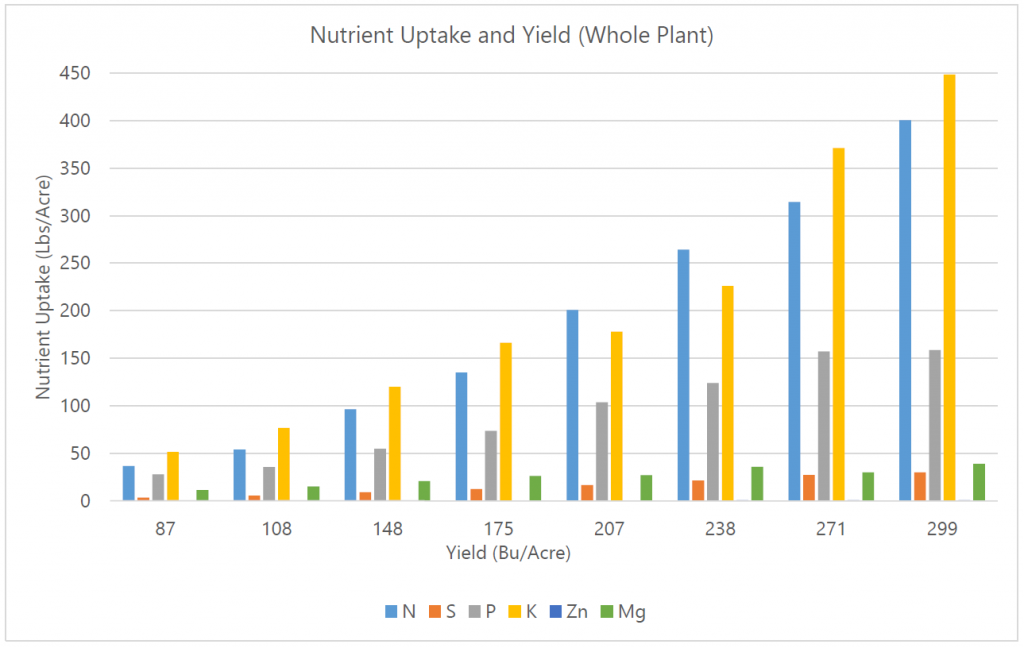
Whole Plant Uptake and YieldResearch from Tony Vyn shows that if yield increases by 3X (108 to 299 bu/acre) you remove 8X N, 9X K, and 10X S from the ground.

As you can see in the chart above, the nutrients required are dependant on your final yield. Higher yielding crops have a much greater demand for nutrients than lower yielding ones. In the case of nitrogen, you need approximately 65 lbs more N for every 30 bu increase in yield. Fields that used to yield 175 bu and yielded 240 last year use double (130 lbs more) the amount of nitrogen to make that crop.
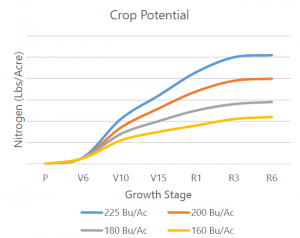
Crop Potential ChartCrop potential can be established in the mid
vegetative growth stages and we can use this information to nail down our final nitrogen recommendation. Fields that have more lbs of N,P,K/acre out of the ground earlier in the growing season turn into higher yielding crops.
Because of the differences in the requirement for nitrogen we recommend analyzing the crop potential earlier in season to determine your optimum nitrogen rate.

If you are planning a late N application this year, consider using whole plant analysis to know when to chase the big yield or save your money on a crop that may not need much additional N.

The cost of a whole plant analysis is $40.00 and the results will be available 2 days after we receive the sample.
Nutrient Balance Index

Since I have been dwelling so much on nitrogen this year I thought it would be a good idea to re-affirm the importance of nutrient balance! This year we added a new parameter called the nutrient balance index (NBI).

NBI interpretation:
0-50 – Excellent
50-100 – Some imbalance
100-175 – Imbalances are present
175+ – Severe imbalance
Plant tissue testing is an under-utilized tool that can tell us a great deal about the nutrients available to the crop. We use soil testing to measure the nutrients we think will be available to the plant, but a host of factors (not only chemical, but also physical, biological and environmental) contribute what is actually available to the plant.
With crops in the reproductive stages it is an excellent time to “ask the plant how it feels” about the growing conditions.
Sampling Strategies:
Sample Good vs Bad, Light vs Dark, etc – This will allow you to see quantify the differences you see visually
Don’t sample the absolute worst plants – Especially leaves that are dead or damaged. Try to sample leaves that are poor but not the worst.
Corn – Corn at tasseling should be sampled from the ear leaf.
Soybeans – Sample the most recently matured trifoliate.
Take a soil sample – Adding a soil sample from the same spot can help you confirm the results of your tissue test and allows for better understanding of the interaction between your soil and the plant.
More information on tissue analysis is available here:

Corn Plant Tissue Composition at Different Growth Stages

When we perform plant tissue analysis on corn currently, we analyze the nutrient (N,P,K, etc) content of the plant.

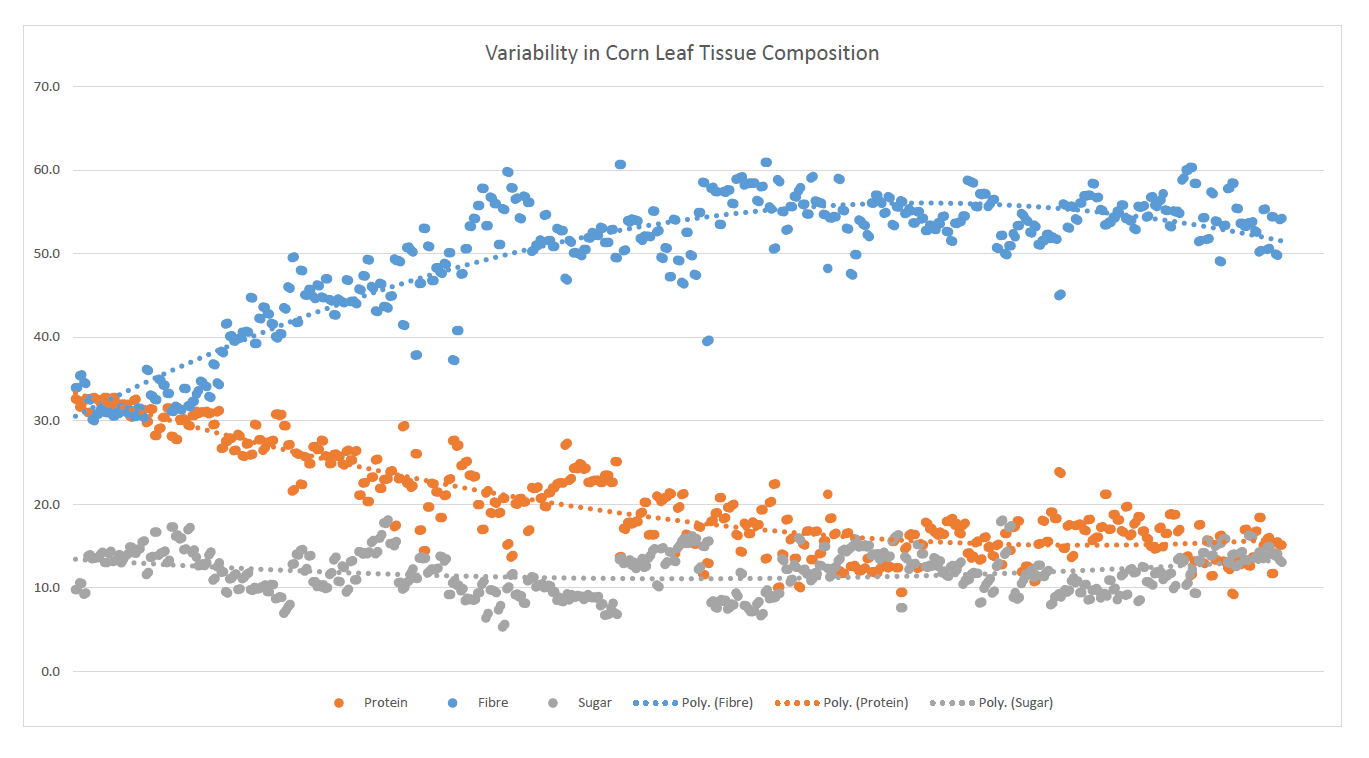
Last year we measured the structural and mobile components (protein, fibre and sugar) to learn about variation that occurs in season. Here are some of our findings.

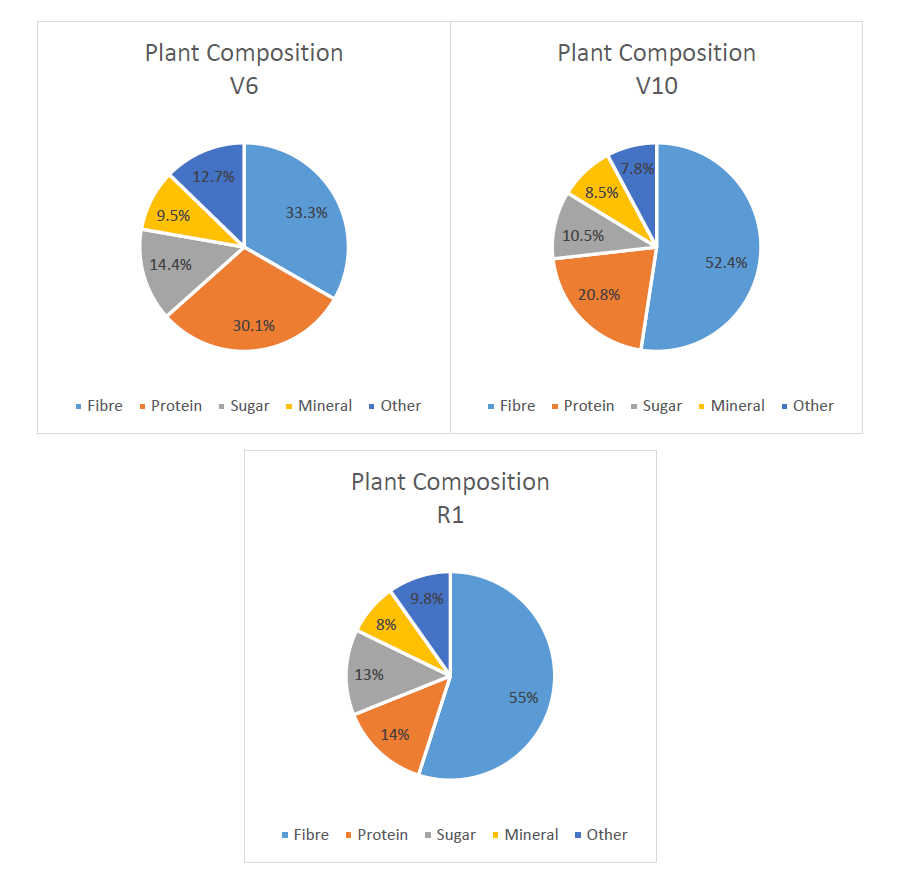
Plant composition changes at different growth stages:

Plant Comp by Growth Stage

As the plant grows the structural component of the plant increases. Protein and mineral content will decrease as the plant matures. Sugars follow the decreasing trend until tasselling where the levels generally climb again.

Variability in Composition Over Time

Corn Variabilty

For the 2015 growing season protein, fibre, sugar and total mineral content is available on our corn plant tissue tests for FREE! If you are interested in plant tissue testing you can contact us here:

Contact